AI Sales Outsourcing
If you feel like your SaaS company is spinning its wheels when it comes to sales, you’re not alone. Markets are crowded, attention spans are short, and customers expect personalised experiences at every interaction. I remember when I launched my first software product; there were fewer channels to manage and buyers were willing to sit through generic demos. Fast forward to 2025 and the world has changed. Buyers expect to be treated as individuals, not entries in a CRM. They research independently, compare vendors across continents and demand value before committing to a call. As a founder or sales leader, you can’t afford to rely solely on old-school tactics or handle every task in-house. You need a model that combines the flexibility of outsourced support with the precision and speed of artificial intelligence (AI), while still preserving the human touch that builds trust. In this article, we’ll explore how sales outsourcing and AI are rewriting the playbook for IT and SaaS firms and how you can harness both to build a high-performance revenue engine.
The Evolution of Sales Support & Outsourcing
Sales support has traditionally been seen as a back-office function – the people who update the CRM or book your travel while sellers go after deals. Today it’s a strategic lever for growth. In 2025, modern support specialists manage systems, qualify leads, prepare proposals and coordinate logistics so your account executives can focus on conversations and closing. They keep data clean, ensure every quote is tailored to the buyer’s needs and provide the collateral that helps your solution stand out. Without this backbone, even the most talented reps can drown in admin work.
Outsourcing these tasks has become a popular solution, particularly for scale-ups that need to move quickly. By tapping into specialised teams abroad, you can expand your reach into new regions, access multilingual talent and ramp up or down without lengthy hiring cycles. Outsourcing isn’t just for SDRs either: it covers appointment setting, LinkedIn outreach, marketing operations and even high-level deal support. When executed well, it empowers your team to spend more time selling and less time researching contacts or building slide decks.
Why Outsourcing Remains Strategic
The appeal of sales outsourcing isn’t just about cost savings. It’s about agility. When you partner with the right provider, you gain instant access to experienced professionals who understand your industry and speak your customers’ language. Outsourced teams can quickly deploy proven playbooks for lead generation, cold outreach and account qualification. They bring fresh perspectives from working with multiple clients and can test different approaches without risk to your brand. Most importantly, outsourcing allows you to scale capacity up or down as your pipeline ebbs and flows, ensuring you never miss an opportunity because your internal team is overloaded.
Of course, not all outsourcing experiences are created equal. Traditional providers sometimes lock you into rigid contracts, making it hard to adjust headcount when market conditions change. They may operate with minimal oversight, creating a disconnect between your brand and the buyer’s experience. Turnover can be high and cultural misalignment can make conversations feel generic or off-brand. Hidden costs, slow ramp-ups and lack of advanced technology are other pitfalls. The good news is that modern, tech-enabled partners address these challenges by offering flexible terms, shared dashboards and AI-powered workflows. We’ll explore how AI eliminates many of the traditional headaches of outsourcing later in this guide.
Enter AI: Transforming How We Sell
If outsourcing brings scale and specialised talent, AI brings speed and intelligence. Machines are now handling repetitive tasks that once consumed hours of human effort. Consider the simple act of logging calls and emails – something every rep knows is crucial yet time-consuming. AI can automatically record conversations, transcribe notes and synchronise data to your CRM. It can schedule follow-ups, send reminders and even progress deals through stages based on triggers. Tools like Gong and Clari capture every buyer interaction across phone, email and video, analyse patterns and surface insights on what top performers do differently. Meanwhile, AI sales engagement platforms automate entire cadences: they send thank-you messages, nurture leads and create tasks when someone downloads your whitepaper. With AI keeping the conversation going, no opportunity falls through the cracks.
The results speak for themselves. When Habitium automated its data management and reporting, it slashed manual work by 80% and increased sales by 11%. Vaultra Storage saw an 84% jump in email engagement and faster deal closures after automating follow-ups. AI-powered lead scoring ensures the hottest prospects get immediate attention; Agicap doubled its monthly qualified leads and grew recurring revenue sixfold after implementing an AI-driven CRM. These aren’t isolated success stories – they’re signals of a broader shift in how companies operate. AI is not only doing the grunt work; it’s surfacing opportunities, predicting which deals will close and recommending the next best action for each contact.
Below are some of the most impactful AI capabilities that every SaaS or IT sales team should consider:
- Conversational intelligence: Platforms like Gong and Chorus record and analyse calls to identify winning talk tracks, highlight objection-handling techniques and suggest coaching points.
- AI sales engagement & CRM: Solutions such as Pipedrive and HubSpot automate data entry, send sequenced emails and update pipelines without human input.
- Generative copy & personalization: Tools like Copy.ai and Jasper craft outreach messages based on buyer personas and previous interactions. They allow one rep to send tailored outreach to hundreds of prospects a day.
- Predictive forecasting & lead scoring: AI algorithms identify which leads are most likely to convert by analysing firmographic data and behavioural signals. They prioritise high-value prospects so your team spends time where it matters most.
- Contract intelligence & compliance: Platforms such as Icertis automatically draft, review and standardise contracts, flagging deviations and ensuring compliance. Reports show that 85% of legal professionals expect AI to assist in contract generation and review and companies implementing AI in contract management see up to a 39% reduction in lifecycle time.
- Risk & sentiment analysis: AI tools monitor proposals and conversations to detect risk terms, tone and sentiment. In a WorldCC survey, 94% of respondents expected AI to play a critical role in risk and compliance analysis.
AI in Contract Sales & Legal Automation
For companies engaged in enterprise software and SaaS, the final stages of the deal – drafting, negotiating and signing the contract – are often the most painful. Long negotiation cycles and endless redlines can kill momentum and stall revenue. This is an area where AI is delivering dramatic improvements. AI-driven contract platforms produce first drafts based on your templates and the buyer’s inputs, highlighting clauses that require human review. During negotiations, machine-learning systems automatically suggest compliant alternatives and detect risky deviations in real time. They track versions, compare language against your approved library and ensure nothing slips past legal teams.
Beyond drafting and redlining, AI handles compliance monitoring. It cross-checks contract language with internal policies and industry regulations, flagging potential issues before they become liabilities. According to industry surveys, 94% of procurement professionals expect AI to play a critical role in risk analysis for contracts. These tools free legal and sales teams from manual document review, accelerate negotiations and reduce the likelihood of disputes. The result? Deals close faster, risk is reduced and your teams spend more time building relationships instead of scanning PDFs. If you’re exploring AI-enabled contract solutions, look at providers like Icertis or Fynk to understand how automation can streamline your own processes.
At Buinsoft we integrate these contract-management insights into our sales outsourcing services. While our partners handle outreach and qualification, our in-house consultants ensure that your proposals, statements of work and agreements align with best practices. If you need help modernising your contract workflow, our IT consulting team can advise on selecting and configuring the right AI platform.
Blending AI and Human Expertise
One common fear we hear from founders is that AI will make sales feel robotic and impersonal. The truth is the opposite. When used thoughtfully, AI enhances human connection rather than replacing it. By taking over repetitive tasks – updating the CRM, logging notes, scheduling follow-ups – machines free your reps to do what only humans can: understand subtle cues, build trust and craft bespoke solutions for each prospect. AI tools can even make your team sound more human; generative models adapt tone and vocabulary to match the buyer’s context.
As you introduce AI into your sales process, keep these best practices in mind:
- Treat AI as a co-pilot, not an autopilot. Use data-driven recommendations to guide conversations, but trust your intuition when building relationships.
- Maintain authenticity. Personalise your outreach by referencing real pain points and experiences. AI can suggest talking points, but it’s up to you to make them resonate.
- Invest in training. Ensure your team understands the capabilities and limitations of your tools. Effective adoption requires ongoing coaching and feedback.
- Monitor and iterate. AI models improve over time with quality data and feedback. Review results regularly and adjust your workflows to capture emerging opportunities.
When you strike the right balance, AI becomes an amplifier for your team’s human strengths. Your reps spend more time asking questions, listening and tailoring solutions; your support specialists spend less time copying and pasting data. Together, you create a sales engine that feels personal to prospects and scalable for your business.
Choosing the Right Partner & Tools
With so many options, it can be overwhelming to decide which outsourcing provider and which AI tools are right for your organisation. Here’s a checklist to guide your decision:
- Industry expertise: Choose partners who understand the nuances of IT and SaaS markets. Review case studies or references in your sector.
- Tech integration: Ensure their systems connect seamlessly to your CRM, marketing automation and support stack. Ask about APIs and data-sync capabilities.
- Cultural fit: You’ll be communicating frequently, so make sure their team aligns with your values and tone. Meet their leadership and sample their messaging.
- Transparency and reporting: Expect shared dashboards, regular updates and clear performance metrics. Avoid vendors who operate behind closed doors.
- Flexibility: Your needs will evolve. Choose a partner who can adapt to new product lines, geographies or go-to-market strategies without locking you into long contracts.
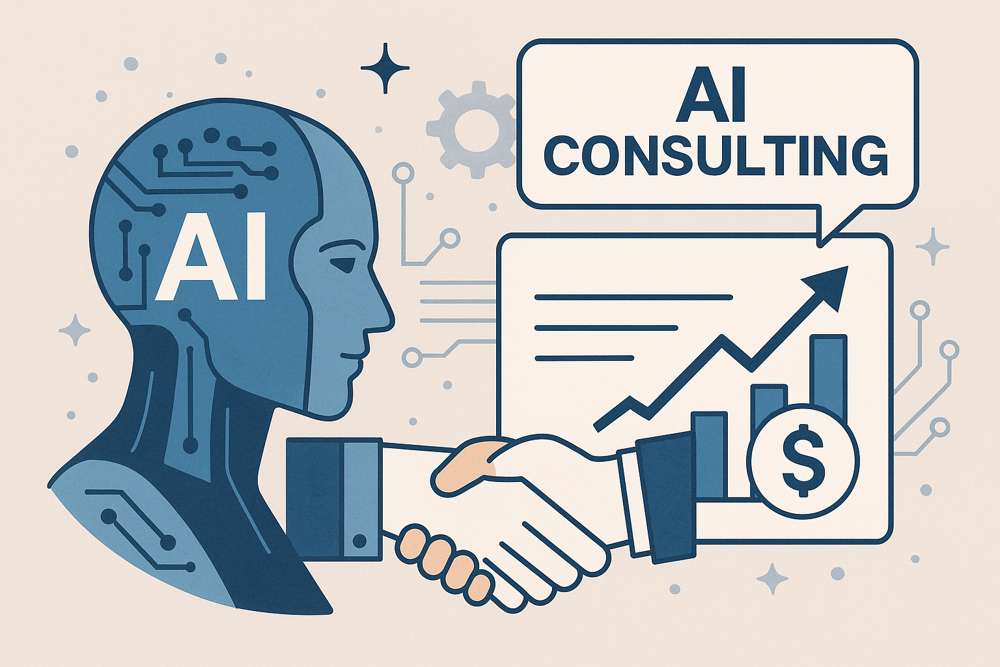
When evaluating AI tools, look for solutions that complement your existing stack rather than complicate it. Ask about support, security and roadmap alignment. At IT SalesSaaS we combine our outsourced sales and marketing services with AI consulting. Whether you need help selecting a conversational intelligence platform or building a data enrichment pipeline, our team can guide you. Contact us to discuss your goals.
Case Study: Accelerating Growth With AI & Outsourced Sales
To illustrate how these ideas work in practice, consider the fictional story of BrightMetrics, a SaaS start-up that built a powerful analytics platform but struggled to find traction. The founding team were engineers who had never run a sales operation. They hired two SDRs in-house but quickly became overwhelmed with prospect research and scheduling. Deals stalled because follow-ups slipped through the cracks and their message felt technical.
BrightMetrics decided to partner with an outsourced sales specialist focused on IT markets and integrate AI tools from day one. The provider supplied a multilingual team fluent in Dutch, German and English and used AI to qualify leads, schedule demos and personalise outreach. Conversation intelligence analysed every call, highlighting the best questions and helping refine their pitch. A contract management platform drafted agreements and flagged risk clauses, shaving weeks off negotiation cycles. With the data entry and follow-up automated, BrightMetrics’ founders were freed to focus on refining the product and building relationships with high-value prospects.
The results were dramatic. Within six months BrightMetrics doubled its monthly qualified leads and saw recurring revenue grow by 70 percent. Email engagement increased by over 80 percent, and contract approval times dropped by nearly 40 percent. Most importantly, the founders felt confident that every lead was handled professionally and that their brand voice was consistent across channels. Stories like this aren’t unusual; when you combine human expertise, AI insights and a committed team, you create a sales machine that is both personal and efficient.
Step-by-Step Guide to Implementing AI-Enhanced Outsourced Sales
Ready to bring your own sales operation into the future? Here’s a step-by-step roadmap inspired by industry best practices and our experience with clients:
- Assess your readiness. Audit your current processes, tech stack and data quality. Are your sales and contract workflows well documented? Is your CRM clean and accessible? Clear processes enable smoother AI integration.
- Identify pain points. Talk to your sales reps, support team and customers to understand where they spend too much time or where deals get stuck. Prioritise areas like lead generation, follow-up or contract drafting.
- Select the right partners. Choose an outsourcing provider with experience in your industry and proven success with AI-enabled selling. Evaluate AI vendors for conversational intelligence, CRM automation, contract management or lead scoring.
- Start small and test. Implement one AI tool at a time and run a pilot with a subset of your team. Measure results against clear KPIs like lead response time, conversion rate or cycle length.
- Train your team. Provide workshops on how to use the new tools and integrate them into daily workflows. Encourage open feedback and share success stories.
- Iterate and scale. Review performance regularly, refine your approach and expand the use of AI and outsourcing across other product lines or regions. As you grow, ensure your partners can adapt and that data flows remain accurate.
Our IT sales outsourcing services include guidance through every phase of this journey. We help clients audit their processes, select the right technology and build a roadmap for sustainable growth.
Looking Ahead: Trends for 2025 and Beyond
The pace of change in sales technology shows no signs of slowing. Here are some trends we see shaping the next few years:
- Hyper-personalization at scale: AI will use behavioural data, intent signals and context to craft messages that feel one-to-one, even in high-volume campaigns. This will blur the line between human and machine-generated content and raise the bar for authenticity.
- Voice and video intelligence: Analysis of tone, pauses and facial expressions will offer deeper insights into buyer sentiment. Tools like Consensus will deliver dynamic product demos that adapt in real time to viewer preferences.
- Integrated data ecosystems: Siloed systems will fade away as CRMs, marketing platforms, contract tools and analytics suites converge. Real-time data sharing will empower AI to make smarter predictions and recommendations across the entire revenue operation.
- AI-assisted negotiations: Machine learning will not only flag risky clauses but also suggest optimal terms based on historical deals and market benchmarks, helping both sides reach agreement faster.
- Ethical AI and data privacy: As AI becomes pervasive, companies will need to establish ethical guidelines and ensure compliance with evolving regulations like GDPR. Transparent data practices will become a competitive advantage.
- Multilingual and multicultural outreach: With global markets a click away, AI will assist in translating and localising messages while outsourced teams provide cultural context. This combination will help mid-size SaaS companies expand into new regions without sacrificing relevancy.
Staying ahead of these trends requires continuous learning, experimentation and the willingness to adapt. At IT SalesSaaS, we’re committed to helping our clients navigate this landscape. Whether you need a partner to test new AI tools or an outsourced team that can expand your reach, we’re here to support you.
Conclusion: Take the Next Step
Building a sales engine that thrives in 2025 and beyond is about combining the right people, processes and technology. Outsourcing provides the specialised talent and flexibility to scale quickly; AI brings speed, intelligence and consistency; and your team brings the empathy, creativity and strategic insight that no machine can replicate. By automating tedious tasks, delivering data-driven insights and enabling personalised outreach at scale, you free your team to focus on what humans do best: building trust and closing deals.
If you’d like to explore how AI and outsourcing can transform your sales process, feel free to reach out. Our partners at AI consulting specialise in aligning technology with business goals. And if you’re ready to start building a predictable pipeline today, contact our team to discuss how we can help you grow. Together, we’ll craft a strategy that balances human connection with machine intelligence – and delivers results.