

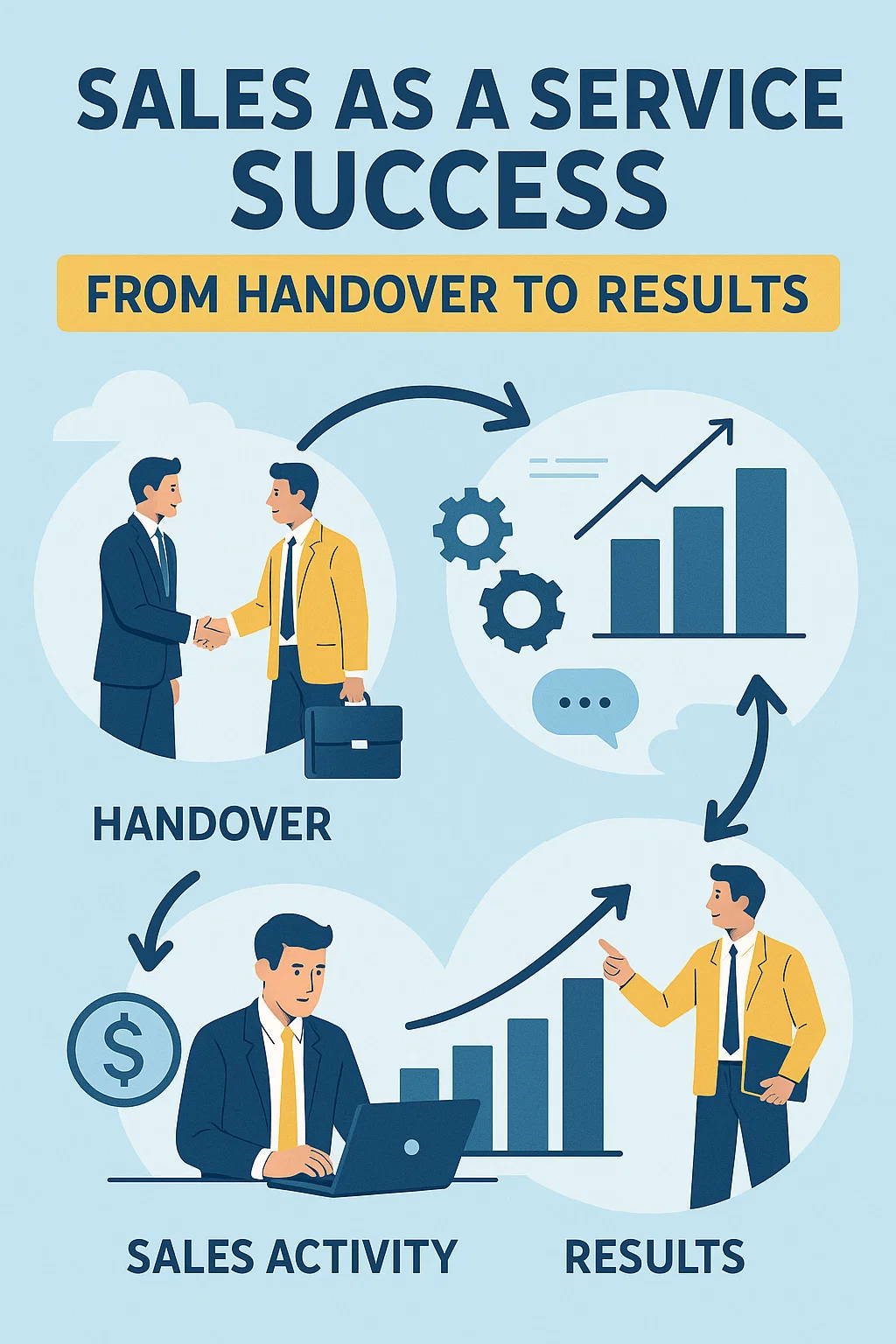
When businesses choose a Sales as a Service (SaaS) provider, their main expectation is measurable outcomes. But between the client handover and tangible results lies a structured process of tracking, analyzing, and optimizing performance. Success in outsourced sales depends on more than just execution — it’s about transparent reporting, clear KPIs, and ongoing performance evaluation.
In this post, we’ll explore how the client handover process evolves into measurable sales success, the key metrics every business should monitor, and how performance evaluation ensures continuous growth.
Why the Handover Phase Sets the Tone for Success
The journey starts with the client handover. This is more than a formal transfer of information; it’s the foundation of the sales partnership. A strong handover ensures that the SaaS sales team fully understands the client’s:
-
Target market and buyer personas
-
Value proposition and competitive differentiators
-
Sales cycle length and typical objections
-
Revenue goals and expectations
Without clarity at this stage, even the most skilled sales teams risk misalignment. On the other hand, a well-structured handover enables a smooth transition from strategy to execution, ensuring that KPIs and metrics are aligned from the very beginning.
Defining KPIs in Sales as a Service
Key Performance Indicators (KPIs) are the backbone of measuring success in SaaS sales outsourcing. Unlike vanity metrics, KPIs are tied directly to business goals. Some of the most impactful KPIs include:
-
Lead Conversion Rate – Percentage of leads turning into qualified opportunities.
-
Pipeline Growth – How consistently the pipeline is filled with high-quality prospects.
-
Cost per Acquisition (CPA) – The total cost of acquiring a new customer.
-
Sales Velocity – The speed at which opportunities move through the sales funnel.
-
Revenue Growth – Ultimately, the most critical metric for both client and provider.
By agreeing on KPIs during the handover phase, both parties establish shared accountability and transparency.
Metrics That Matter Beyond KPIs
While KPIs provide strategic benchmarks, supporting metrics help fine-tune performance on a daily basis. These include:
-
Number of outreach attempts per rep
-
Email open and response rates
-
Average deal size
-
Customer retention and churn rates
-
Time to first meeting
When tracked consistently, these metrics highlight where adjustments are needed — whether in messaging, targeting, or sales tactics.
The Role of Continuous Performance Evaluation
Performance evaluation is not a one-time event; it’s a recurring process that ensures alignment with client goals. A Sales as a Service provider should establish regular check-ins and transparent reporting cycles.
Best practices include:
-
Weekly Reports: Tracking tactical execution (calls made, demos booked, opportunities created).
-
Monthly Reviews: Assessing progress against KPIs and highlighting areas for improvement.
-
Quarterly Business Reviews (QBRs): Analyzing long-term trends and adjusting strategy for scalability.
By integrating these touchpoints, clients gain full visibility into how their outsourced sales function is performing and evolving.
Turning Data into Action
Metrics and KPIs are valuable only if they drive actionable insights. For example:
-
If conversion rates are low, review lead qualification criteria.
-
If sales velocity slows, identify bottlenecks in the funnel.
-
If CPA is rising, reassess targeting or outreach methods.
A data-driven approach allows SaaS sales teams to continuously optimize processes and deliver better results over time.
Building Long-Term Trust Through Transparency
Outsourcing sales is a significant decision for any business. Clients want assurance that their investment is driving measurable ROI. Transparency in reporting, proactive communication, and clearly defined KPIs build the trust necessary for long-term partnerships.
By aligning performance evaluation with business outcomes, a Sales as a Service model proves its value not just as a short-term solution but as a growth accelerator.
From client handover to results, the success of Sales as a Service lies in setting clear expectations, defining measurable KPIs, and consistently evaluating performance. Companies that embrace a data-driven, transparent approach will not only see better sales outcomes but also build stronger, more trusted partnerships.
When executed correctly, Sales as a Service transforms from a tactical outsourcing solution into a strategic driver of sustainable revenue growth.