
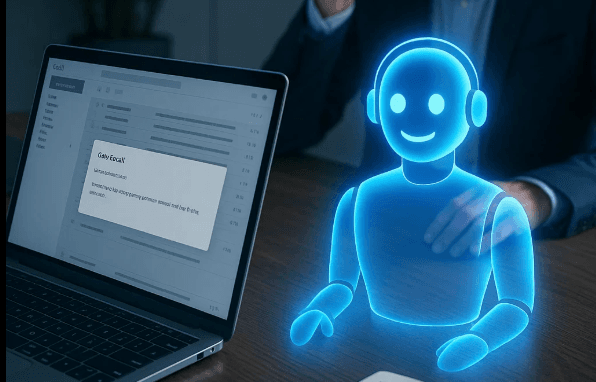
Salesforce Hunter is the new outbound sales agent from Salesforce. It researches prospects, drafts and sends outreach and keeps working toward a pipeline goal for weeks instead of stopping after one task. Salesforce announced it on 11 September 2026, just before Dreamforce, and plans general availability for November 2026.
If you run sales in Europe, the demos leave a practical question open: what does a Salesforce outbound agent need to work, and what can go wrong once it writes to buyers in Prague or Munich? This guide sticks to what Salesforce and its partners have published, flags what they have not, and ends with a readiness table for your next pipeline meeting.
What is Salesforce Hunter?
Hunter is an AI agent that works inside Salesforce toward a sales goal you set. According to the Salesforce Hunter product page, it researches and prioritizes prospects, drafts and sends outreach, moves opportunities forward, prepares proposals and supports forecasts. Salesforce calls it long-running because it keeps the goal, the plan and the customer context in view over weeks and months.
The Salesforce launch announcement of 11 September 2026 lists Hunter as pilot now, general availability in November 2026, and says 60% of Perk's sales pipeline is built by Hunter. No meeting quality or close rate comes with that figure, so treat it as an early signal, not a result.
As of 27 September 2026, Salesforce has not published Hunter's price, the regions it will be sold in or the languages it supports, on the product page or in the announcement. The announcement itself tells customers to base purchase decisions on features that are currently available.
How does the Salesforce outbound agent work?
You set a goal, Hunter turns it into a plan and works the plan inside your approval rules. In a Salesforce blog post on long-horizon agents, a rep asks Hunter to re-engage at-risk deals. Hunter turns that into a measurable target, re-engaging USD 340,000 of at-risk pipeline by quarter-end, and plans the tasks, the schedule and the points where it must check in for approval.
The launch announcement names three capabilities behind this:
- Memory keeps context and progress across sessions, so work does not stop when a chat ends.
- Durable execution keeps plans running over time and lets the agent correct course when things change.
- Dynamic steering adapts the agent's behavior to user feedback, such as a more formal tone with VPs.
Two details matter most for outbound. In Salesforce's walkthrough, Hunter asks for access to the rep's email account so it can send on the rep's behalf, in the rep's own tone. And the product page says actions that reach a customer can require rep approval, with every action logged. Can, not must: you configure it.
For data beyond your CRM, Hunter pulls approved third-party data through Salesforce's Data Vendor Gateway. Apollo's release on PR Newswire says Hunter users can reach Apollo's 240 million contacts even if they are not Apollo customers, with prospecting actions that add verified work emails and mobile numbers.
What does Hunter need to work?
Four things, and none of them ship with the product. Hunter learns your sales motion from CRM history, customer conversations, enablement content, seller activity and third-party signals, so it repeats whatever those sources contain.
- Clean CRM data. Industry, size and country filled in, no duplicates, and flags on accounts nobody should touch: customers, open deals, partners and competitors.
- Contact data you can defend. Know where each contact came from and your legal basis for using it. Our guide to IT sales leads covers sourcing and qualification.
- A written ideal customer profile (ICP). If your team cannot agree on what a good customer looks like, neither can the agent. Defining it is the first step of sales strategy development.
- Sending infrastructure. Authenticated domains, healthy mailboxes and someone who checks complaints and bounces every week.
Salesforce promises no weeks of configuration. That may hold for the software, but not for your data. A human SDR notices when a record looks wrong; an agent working a plan for weeks acts on the record as it is.
Is AI outbound legal in Europe? GDPR and national email rules
It can be, but the rules depend on who you write to and where, not on the software that writes. An agent applies your legal position to every message it sends, mistakes included.
Under the GDPR, Recital 47 says processing personal data for direct marketing may be regarded as a legitimate interest, which still takes a balancing test against what people can reasonably expect. Article 21 lets anyone object to direct marketing at any time, after which their data can no longer be used for it, and the right must be pointed out at the latest in the first communication.
If the data comes from a vendor, Article 14 also requires you to tell people where it came from, at the latest at the first communication. With 240 million vendor contacts one click away, expect that question.
National rules sit on top. The Czech data protection office ÚOOÚ explains that commercial email under Act No. 480/2004 needs consent in advance, companies included, with an exception for existing customers. In Germany, section 7 of the UWG, the Act against Unfair Competition, treats advertising email without the addressee's prior express consent as an unreasonable nuisance, with a similar narrow exception.
So the agent must know which country it writes to, and in some markets email is the wrong first channel. Check your own case with counsel.
Do Gmail and Outlook sender rules apply to AI-sent email?
Yes. Mailbox providers judge the sending domain and how recipients react, not who wrote the text. Google's email sender guidelines require SPF or DKIM from every sender and tell you to keep the user-reported spam rate below 0.1% and never reach 0.3% or higher.
Bulk senders, close to 5,000 or more messages to personal Gmail accounts within 24 hours, also need SPF, DKIM and DMARC. Marketing messages need one-click unsubscribe, honored within 48 hours, and since November 2025 Gmail has been ramping up enforcement, including rejections. Microsoft's Outlook requirements demand the same three from domains sending more than 5,000 emails a day to Outlook.com consumer addresses, enforced since 5 May 2025.
These thresholds target personal inboxes, but treat them as the floor. If Hunter sends from your reps' own accounts, as in Salesforce's walkthrough, complaints land on the domain your invoices and support replies use, not on a separate outreach domain. We explain the mechanics in why cold emails go to spam.
Does the EU AI Act apply to AI sales agents?
Where the agent deals with people directly, yes. Article 50 of the EU AI Act, which applies from 2 August 2026, requires providers to design AI systems that interact directly with people so those people are informed they are dealing with an AI, unless this is obvious to a reasonably well-informed person. The information must come at the latest at the first interaction.
The duty sits mainly with Salesforce as the provider, but you decide how Hunter is used. If it answers replies or books meetings without a person in between, ask Salesforce in writing how Hunter meets Article 50 and set your own disclosure rule. Our post on what the EU AI Act changed for sales teams has the details.
The simplest safeguard is human review: keep approval on for every customer-facing action until you trust the agent in each language and market.
Hunter readiness checklist for European sales teams
Before the pilot, get a named owner to answer each question in writing.
| Area | Question to answer before launch | Owner |
|---|---|---|
| CRM data | Are industry, size and country filled in, and off-limits accounts flagged? | Sales ops or CRM admin |
| ICP and message | Is the ICP written down, and has this message already booked meetings? | Head of sales |
| Contact data | Where did each contact come from, on what legal basis, and does the first message say so? | Data protection lead or counsel |
| Sending | Which mailboxes and domains send, are SPF, DKIM and DMARC in place, and who watches complaints? | IT or email admin |
| Approval and disclosure | Which actions need human approval, and how do recipients learn they deal with an AI? | Sales manager with counsel |
| Opt-outs | Does one objection stop every future message from every rep and every agent? | Sales ops |
What Hunter changes for in-house SDRs and outsourced teams
It changes the work, not the need for people. Research and first drafts get cheaper; judgment, conversations and local knowledge do not.
Salesforce's seventh State of Sales report, a survey of more than 4,000 sales professionals in 22 countries, found that 54% of sellers have used AI agents. Sellers expect agents to cut time spent researching prospects by 34% and time spent drafting emails by 36%, the part of the SDR job Hunter targets.
Buyers still want a person at key moments. In a Gartner survey of 645 B2B buyers, 69% said they prefer to validate AI-generated insights with sales reps. For in-house SDRs, that means less list building and more calls, qualification and review of what the agent sends.
For outsourced teams, the question becomes who owns the result. An agent in your Salesforce comes without a guaranteed number of qualified meetings, a tested message for each market or a person accountable for local rules; a partner can bring those, alongside the agent. We compared both routes in AI SDR or outsourced sales team, and our IT sales outsourcing and pricing pages show how we work and what we guarantee.
How to run a fair Hunter pilot
Keep it small, measured and compared with a human baseline. You need five things:
- One segment. One country, one persona, one offer, and a different first channel where email needs prior consent.
- Approval switched on for everything that reaches a customer, with every message read in the first weeks.
- A fixed period and a control group worked by a person or by your current process.
- Qualified meetings and moving pipeline as the measure, not emails sent, with complaints, bounces and opt-outs checked weekly.
- A log of mistakes, fixed in the data behind them and not only in the message.
If the pilot books qualified meetings without hurting your domain, widen it one segment at a time. If you do not run Salesforce, the same checklist applies to any AI sales tool; our guide to AI sales tools for startups is a good place to start.
Frequently asked questions
What is Salesforce Hunter?
Hunter is Salesforce's outbound sales agent. It researches and prioritizes prospects, drafts and sends outreach, moves opportunities forward and supports proposals and forecasts. A long-horizon runtime lets it pursue a goal, such as rescuing at-risk deals, over weeks, within approval rules you configure.
When is Salesforce Hunter available and what does it cost?
Salesforce lists Hunter as in pilot, with general availability planned for November 2026. As of 27 September 2026, it has not published Hunter's price, supported regions or supported languages on the product page or in the launch announcement, so ask your account executive for these details in writing.
Can you use an AI outbound agent under GDPR?
Often yes, on the same terms as human outreach. Direct marketing may rest on legitimate interest after a balancing test, people can object at any time and must be told so in the first message, and vendor data needs its source disclosed. National rules, such as Czech consent for commercial email, still apply. Check with counsel.
Will Hunter replace SDRs?
Not on the evidence so far. Salesforce says reps remain at the center of customer relationships, and Gartner found that 69% of B2B buyers prefer to validate AI-generated insights with sales reps. Expect SDRs to spend less time on research and drafts and more on calls, qualification and review.
Get the groundwork right before the agent arrives
An agent speeds up what already works. It does not fix a vague ICP, a messy CRM or a domain with a spam problem. That groundwork is what we do for IT and SaaS companies, with outreach in English, Czech and Turkish.
See our lead generation and IT sales outsourcing services, or start with sales strategy development if the ICP is the gap. Our pricing is public: Launch, Traction and Scale cost 1,750, 2,900 and 4,900 euros a month, with 5, 10 and 15 qualified meetings a month guaranteed.
Sources and further reading: Salesforce, Hunter product page; Salesforce, launch announcement of 11 September 2026; Salesforce, blog post on long-horizon agents; Apollo, data partner release on PR Newswire; GDPR, Recital 47; GDPR, Article 21; GDPR, Article 14; ÚOOÚ, Act No. 480/2004; German UWG, section 7; Google, email sender guidelines; Microsoft, Outlook requirements for high-volume senders; EU AI Act, Article 50; Salesforce, seventh State of Sales report; Gartner, B2B buyer survey of 20 May 2026.